Blog 5: Why Breakouts Often Fail—and When They Become Traps
Introduction
Breakout trading is one of the most popular strategies in the market. The idea sounds simple: buy when price breaks a key resistance level and ride the momentum. But in reality, many breakouts fail—and often turn into traps for late buyers. Understanding why this happens can completely change your trading results.
Why Breakouts Often Fail
- Late Participation: By the time a breakout is obvious, smart money has often already entered earlier. Retail traders chasing the breakout buy at the absolute top, reducing reward potential and maximizing risk.
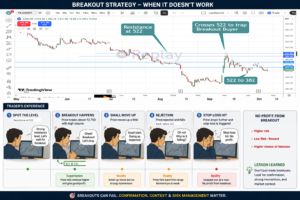
- Liquidity Events: Breakouts attract a massive cluster of retail buy orders and short stop-losses. Larger institutional participants use this surge of buy orders to exit their large positions or take the opposite side (shorting), causing the price to reverse.
- Lack of Follow-Through: Without sustained, heavy buying volume, the breakout momentum quickly fades, and the price falls back below key levels.
What is a Breakout Trap (Bull Trap)?
A breakout trap occurs when price breaks a major resistance level, drawing in breakout buyers, only to reverse sharply and close lower. This triggers panic selling, hitting stop-losses, and trapping buyers at high prices. These are commonly known as bull traps.
A Smarter Approach: Early Positioning
Instead of chasing breakouts at resistance, a more structured approach is early positioning. Identify consolidation and accumulation patterns before the breakout happens. This allows a much better entry price, a tight stop-loss, and a much higher reward-to-risk ratio.
Final Thought
Breakouts are not inherently bad, but blindly chasing them is. The edge lies in understanding market structure, entering early, and managing risk effectively. Position before the movement, not during it.
Want to catch momentum trades before the breakout becomes obvious? Check our setups at Momentum Edge:
Explore Our Plans
Disclaimer: Investment in securities markets is subject to market risks. Read all related documents carefully before investing. SEBI Registration No. INH000025948. The views expressed in this article reflect the personal opinions of the Research Analyst based on publicly available information and are subject to change without notice.